Game Review
Aviator and Crash Games Review: How the Format Works in 2026
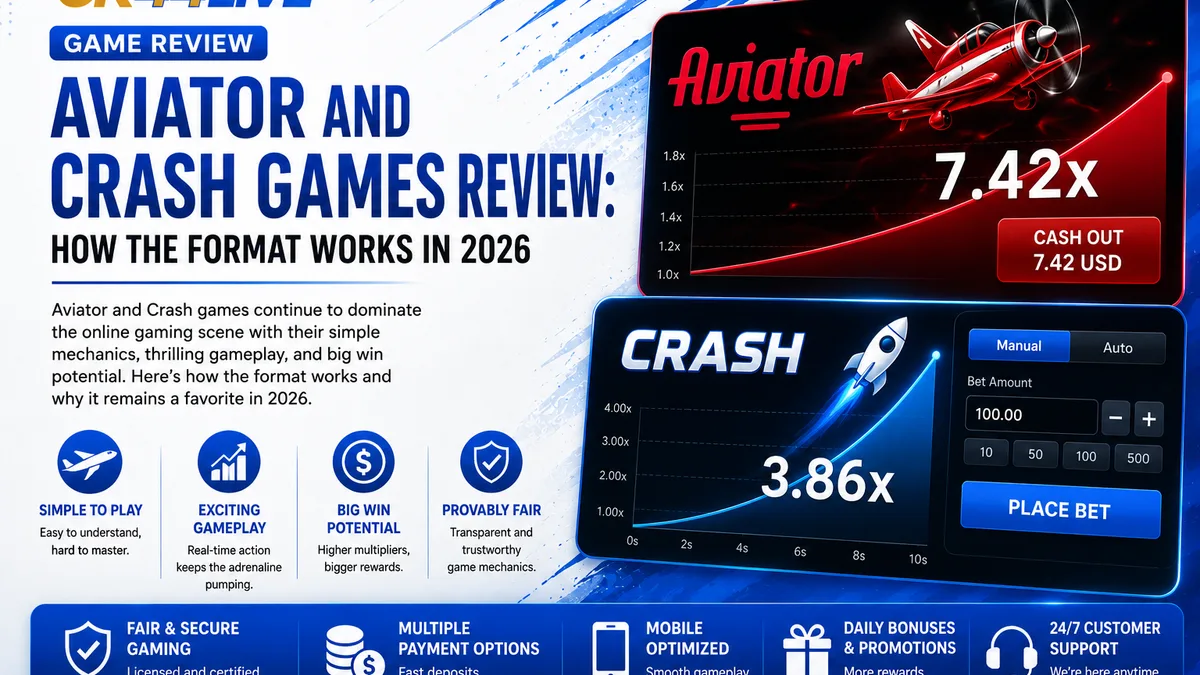
Crash games have become one of the most played formats on Bangladesh facing platforms, and Aviator leads the niche. If you have seen a rising multiplier and a plane that flies off the screen, you have seen the format. The honest core of this review is simple. A crash game is built around a single fast decision, when to cash out, and that decision feels like skill even though the crash point is random for each round. The format suits mobile because phones dominate play, sessions are short, and the mechanics need no tutorial. Aviator from Spribe sets the standard, and other titles like JetX and Spaceman follow the same idea. Reported return to player figures for Aviator are often cited in the high 90s percent, competitive with many slots, but RTP describes millions of rounds, not your session. This review explains how crash games work, how Aviator plays in practice, why no signal or prediction tool can beat it, how the format differs from slots, and how to play it without letting a fast game empty a small wallet. It uses approved sources and does not pretend any pattern beats the long run house edge.
What Are Crash Games and Why Are They Popular?
Crash games are instant win titles where a multiplier climbs from a low number until it randomly crashes, and the player must cash out before it does. They are popular on mobile because the format suits vertical screens, one hand play, very short sessions, and simple mechanics that need no tutorial.
Titles like Aviator, JetX and Spaceman make up a meaningful share of mobile play, second to slots for many players. A round can finish in seconds, so the loop feels alive without a long sit down. For the full menu see our games hub and the dedicated Spribe page. The maker publishes its own information at Spribe, worth reading before you play.
How Does Aviator Play in Practice?
In Aviator you place a bet, a plane takes off, and a multiplier rises as it flies. You cash out before the plane disappears to multiply your stake, and if it flies away first the stake is lost. The crash point is generated randomly each round.
The appeal is the single high tension decision. A round can last under a few seconds if the plane crashes early, or up to roughly thirty seconds if it holds. Many players set an auto cash out at a modest multiplier so the game exits for them, which removes the panic tap moment. Reported RTP figures sit in the high 90s percent, but that describes millions of rounds, not your sitting, and the exact figure should be confirmed on the platform you use.
Can Any Tool Predict When the Plane Crashes?
No. The crash point is random and generated for each round, so there is no pattern to read and no multiplier that is due. A long run of low crashes does not mean a big one is coming, and a big one does not mean the next will be small.
This is the most misunderstood part of crash play. Anyone selling a prediction tool, a signal group, or a guaranteed strategy is selling a myth, because the round result is decided by the game, not by a chart or a hot streak. Provably fair systems on some platforms let players verify after the fact that a round was not tampered with, but verification is not prediction. The real skill in crash games is limited to discipline, choosing a cash out target in advance and sticking to it.
How Do Crash Games Differ From Slots?
Crash games give one timing decision per round, while slots resolve automatically after a spin. Crash feels more interactive and faster, but the underlying truth is the same, the outcome is random and the house keeps a long run edge.
The table below compares the two on the points that matter for a player on a fixed budget.
| Factor | Crash Games (Aviator) | Slots (JILI, PG Soft, Pragmatic) |
|---|---|---|
| Core action | Cash out before the crash | Spin and let the result resolve |
| Round length | Seconds to about 30 seconds | A few seconds per spin |
| Feeling of control | High, one timing choice | Low, auto resolved |
| Real control | Discipline only | Discipline only |
| Main risk | Many fast bets in a short sitting | Frequent small wins masking drift |
| Outcome | Random, house edge over time | Random, house edge over time |
For the slot side of this comparison, see our JILI games review and our Pragmatic Play slots review.
How Do You Play Crash Games Without Getting Burned?
Set a deposit limit before you start, keep the stake small and fixed, and decide a cash out target in advance rather than chasing a bigger multiplier mid flight. Treat any win as money to withdraw, not to recycle into the next round.
The speed is both the appeal and the danger. Because a round ends in seconds, it is easy to place many bets without noticing how fast money moves. An auto cash out at a modest level helps you stick to a plan instead of getting greedy at the worst moment. Keep the CK44 Live responsible gaming guide in mind, and play only if you are 18 or over.
Frequently Asked Questions
Is there a strategy that beats Aviator?
No. The crash point is random, so no betting pattern or signal changes the long run house edge. The only real control is discipline through a fixed stake, a planned cash out target, and firm limits. Anyone promising guaranteed wins is not being honest.
What is the RTP of Aviator?
Reported figures are often cited in the high 90s percent, competitive with many slots, but RTP describes millions of rounds, not one session. It never guarantees a winning sitting, and the exact figure should be confirmed on the platform you use.
How long does a crash round last?
A round can be under a few seconds if the plane crashes early, or up to roughly thirty seconds if it holds. Whole sessions are often very short, sometimes only a few minutes, which is part of why money can move quickly.
Are auto cash outs better than tapping manually?
Auto cash out removes the panic tap moment and helps you stick to a planned target, which suits disciplined play. It does not improve your odds, it only improves your consistency by taking emotion out of the exit.
Why do crash games feel more skillful than slots?
Because you make one visible decision, when to cash out, it feels like skill. But the crash point is random, so the decision cannot be informed by any pattern. The feeling of control is real, the control itself is limited to discipline.